Brazil Runs Two Years Behind the U.S. in Political Turbulence. When Brazil Catches Up, It Doubles Down.
There is a striking, almost mathematical rhythm to democratic erosion in the Western Hemisphere’s two largest democracies. Moments of political turmoil in the United States often resurface in Brazil roughly two years later, but rarely as pure carbon copies. As these events travel south, they mutate, taking on greater intensity, coordination, and, at times, posing a deeper threat to democratic institutions.
As Brazilians process the first-round results of their 2026 elections, the warning signs about Brazil’s tendency to follow the political path paved by the United States is clear. Just as Trump 2.0 came back with a vengeance in 2024, Bolsonaro 2.0 appears poised to do the same in 2026.
On October 4, right-wing Senator Flávio Bolsonaro finished with 47% of the votes; left-wing President Luiz Inácio Lula da Silva with 45%. Led by Flávio’s Partido Liberal (PL), the right elected 13 governors, of 26 races. The PL also won 19 of the 54 Senate seats up for grabs and elected the two most-voted for federal deputies in Brazilian history, the right-wing firebrands 30-year-old Nikolas Ferreira of Minas Gerais and 28-year-old Lucas Pavanato of São Paulo.
If Trump’s time in the White House is any indication, the coming years will show just how much damage a Brazilian far-right-wing populist movement on steroids can do to democratic institutions, especially when the target of attacks is the Judiciary branch of government.
Cambridge Analytica vs. WhatsApp
Consider the trajectory of illicit digital influence at scale. In 2016, the United States was rocked by the Cambridge Analytica scandal that showed how hyper-targeted voter manipulation, combined with high levels of disinformation, could influence national elections. Yet for all of its insidious power, much of that battlefield remained visible. The manipulation unfolded on public social media platforms such as Facebook and left a digital trail that investigative journalists, academics, and congressional committees used to trace websites and ad buys, audit networks, and demand accountability.
Two years later, during Brazil’s 2018 presidential campaign, a similar playbook of mass manipulation, disinformation, and hate speech was deployed, this time behind the walls of encryption. Disinformation campaigns from both the right and the left migrated heavily to end-to-end encrypted messaging applications such as WhatsApp. Inside closed groups and peer-to-peer conversations, rumors and fabricated narratives metastasized, largely beyond the reach of electoral authorities. By the time the Superior Electoral Court (TSE) and lawmakers fully understood the scale of what was happening, millions of voters had already been roped into toxic echo chambers.
Twin Insurrections
On Jan. 6, 2021, a mob fueled by narratives of electoral fraud stormed a single, deeply symbolic structure in Washington: the United States Capitol. It was a dark moment in American history, but the physical assault remained largely concentrated on the seat of the legislative branch.
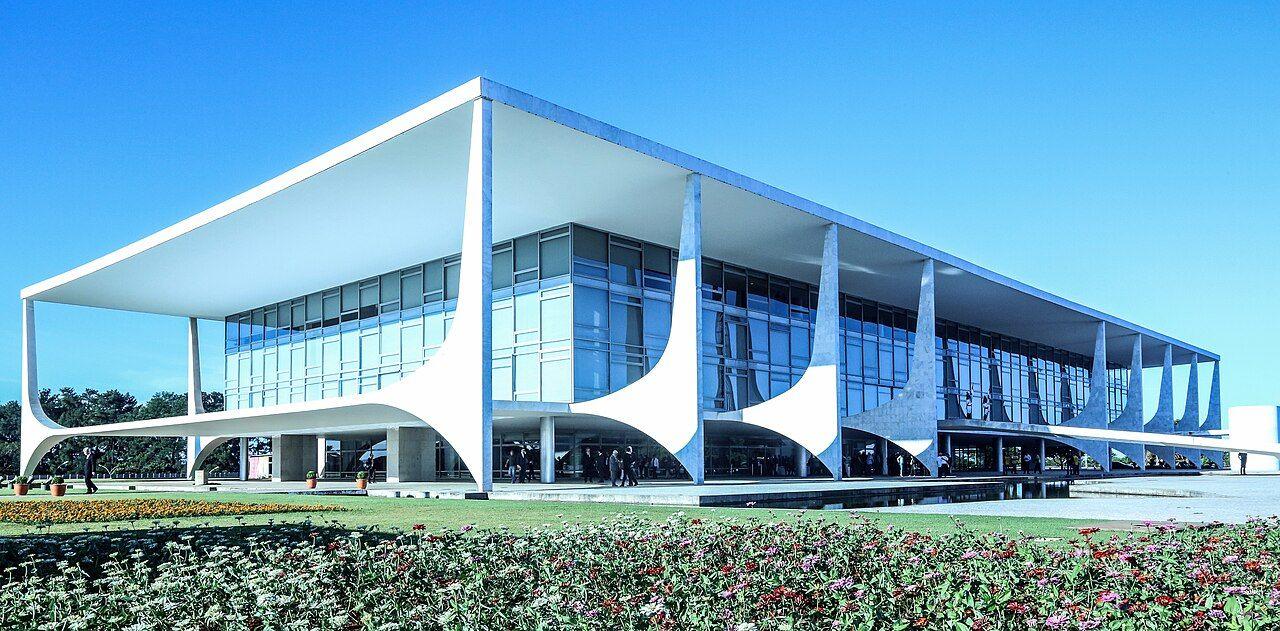
Fast-forward almost exactly two years, to Jan. 8, 2023, in Brasília, the same stolen-election narrative fueled a similar but much more comprehensive attack. Insurrectionists launched a synchronized assault on all three prongs of Brazilian democracy: Congress, the presidential palace, and the Federal Supreme Court.
Brazil’s insurrection was also extensively well organized. Between the October election and January 8, protesters mobilized across the country, and hundreds of chartered buses ultimately transported Bolsonaro supporters to Brasília and the Three Powers Plaza.
Redesigning a Republic Through Executive Overreach
Now, in 2026, we are witnessing another dangerous phase of this two-year cycle between the United States and Brazil.
If Flávio Bolsonaro wins the presidency (and his chances are now very real) the new Brazilian president would control the Executive Branch, hold massive sway with a much stronger right-wing bloc in Congress, and come into office very ready to radically reshape the Supreme Court.
In short, the Brazilian Republic could be approaching a profound institutional transformation – or, as pessimists might put it, the dismantling of the system as Brazilians have known it.
In 2024, the United States saw a wave of right-wing momentum culminate in Donald Trump’s return to the White House. American institutions braced for a period of intense executive overreach. Yet some of the administration’s most controversial measures – including changes involving birthright citizenship – have faced significant resistance from the judiciary.
In Brazil, the same brand of executive overreach will be met by institutions weakened by corruption scandals and years of attacks.
Against the backdrop of real and explosive investigations surrounding the Banco Master corruption scandal (combined with unsupported narratives portraying Supreme Court justices as judges who are “trying to run” the country from the bench), candidates openly campaigned on promises to completely transform the Supreme Federal Court (Supremo Tribunal Federal, or STF). They called for the impeachment of sitting justices, changes to the composition of the court, and new statutory limits on judicial oversight.
What matters now is that these voices are no longer operating from the political margins. They have gained extraordinary power in Congress. And this power came from the people.
Removing a Supreme Federal Court justice in Brazil requires a two-thirds supermajority in the Senate: 54 of its 81 members. Bolsonarism has now elected 44 senators aligned, to varying degrees, with the idea of radically changing the court. That leaves the movement just 10 votes short of the threshold needed to remove one justice (or many).
The implications, therefore, go far beyond any single member of the court. Brazil could be approaching a confrontation over the separation of powers on a scale rarely seen in the country’s (or continent's) recent democratic history.
Looking Forward
For Brazilians, this is a moment to look closely at the United States and understand the democratic changes Trumpism has produced or attempted, like tougher immigration policies, a looser relationship with Big Tech, intense nationalism, and sustained pressure on institutions designed to constrain executive power.
It is equally urgent to watch the upcoming U.S. midterm elections, which could offer a preview of Brazil’s own institutional future. How well American checks and balances withstand pressure from a powerful far-right executive may signal how much democratic terrain could eventually be lost in Brazil.
For Americans, meanwhile, watching Brazil offers an urgent lesson about what can happen when repeated blows to democratic infrastructure go unchecked. Brazil is showing that political crises do not necessarily stabilize over time. When corruption, distrust in institutions, political polarization, and institutional instability converge, crises can evolve. They adapt. They find new vulnerabilities. And they test how much pressure democratic institutions can withstand before they break.
Democracies across the Americas are not evolving in isolation. Political movements are watching one another, learning, iterating, and escalating across borders. If we fail to recognize that pattern – and the gradual normalization of democratic erosion that accompanies it – we will remain perpetually unprepared for the escalation that comes next.