
This article was originally published on DDIA's weekly newsletter, REDESCover. If you know someone who would appreciate this kind of content, please encourage them to sign up here.
Faith, Soccer, Music, and Migration: Topics with Highest Interaction Among U.S. Spanish-Speaking Latinos in 2025
Four major themes dominated discussions across open social media platforms we analyzed throughout the year (based on total interaction figures collected using Newswhip):
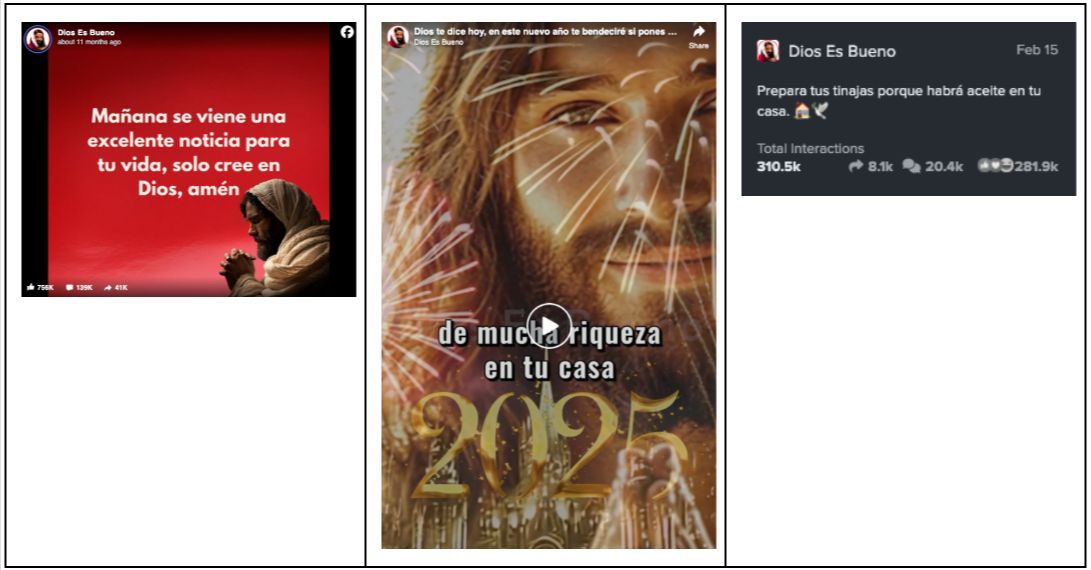
FAITH was the most consistently strong and highest-performing theme of viral conversations across U.S. Spanish-language social media platforms.
On Facebook and Instagram, emotional, spiritually affirming content consistently attracted large Spanish-language engagement.
Viral religious content was fueled by evergreen messages of personal faith and major religious news moments. In Q2, the death of Pope Francis and the election of Pope Leo XIV generated sustained engagement, with outlets such as ACI Prensa and Telemundo framing the transition with reverence and an emphasis on legacy, continuity, and celebration.
Accounts like Dios Es Bueno (which has 26 million followers and is administered from Arizona) repeatedly dominated engagement metrics with short, uplifting posts centered on divine promise, encouragement, and optimism.
Massive engagement with faith-based content suggests that in a digital environment often saturated with negativity and complexity, faith can offer, hope, emotional safety, and a safe harbor from the complexities of day-to-day life. The demand for comfort and reassurance seems closely tied to a broader sociocultural context marked by economic uncertainty, political polarization, and post-pandemic social stress.
SPORTS (SOCCER) ranked second among the most engaging themes.
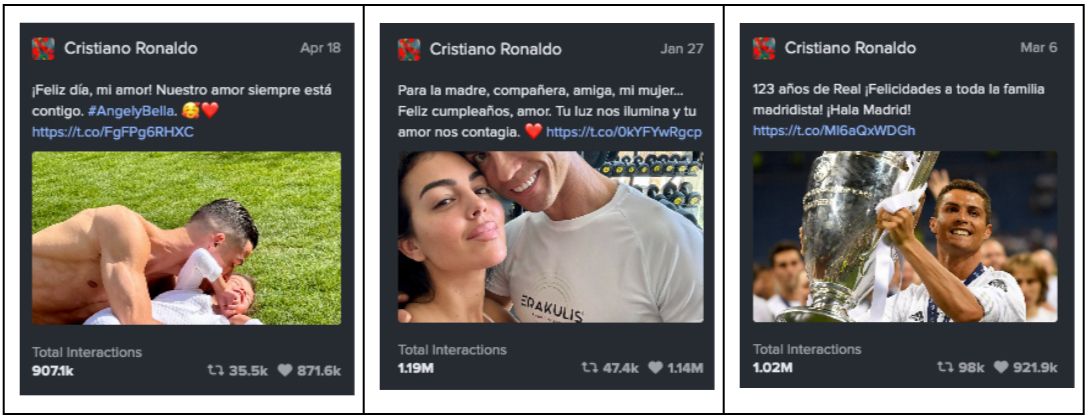
On X, club drama and superstar moments routinely translated into millions of interactions. Cristiano Ronaldo repeatedly crossed the one-million-interaction mark with Spanish-language posts unrelated to match play.
Official accounts such as Real Madrid C.F. and players like Brazilian Vinicius Jr. led engagement on X in Spanish, while news media outlets including TUDN USA and ESPN Deportes captured massive traffic by spotlighting headline-driven moments involving global icons like Lionel Messi and polarizing figures such as Spanish defense soccer player Sergio Ramos following his move to Liga MX.
For U.S. Spanish-speaking audiences, a passion for soccer seems rooted in more than the sport – engagement with players and clubs seems connected to local and national identities, serving as a natural bridge to broader discussions about news, politics, and social issues. Brazilian soccer player Vinicius Jr., for example, is usually a (good) reference for Brazil among U.S. Spanish speakers.
MUSIC, TV, and MOVIES ranked third among the categories with the highest raw interaction volumes.
Karol G dominated U.S. Spanish-speaking Instagram, with multiple posts reaching multi-million interaction levels. Her sustained momentum stemmed from a combination of professional milestones and aspirational messaging centered on self-love, confidence, and authenticity. Daddy Yankee followed a similar trajectory on TikTok, where a single Q4 post promoting “#0/66 Ya Disponible!” generated 10.6 million interactions, underscoring the platform’s ability to transform music announcements into viral events.
Brands such as Netflix and Comedy Central, along with lifestyle creators, scaled engagement through relatability rather than celebrity alone. Creators like Venezuelan writer, model and actress Andrea Cuadros and U.S. podcaster and humorist Stephany Leal consistently drew millions of interactions with short-form videos focused on family dynamics, relationships, and everyday humor.
Across this category, engagement was driven by a few recurring strategies:
Hype generation, through movies and movies trailers and early-release teasers;
Nostalgia and identification, by activating familiarity with well-known content, like previous seasons of TV shows and famous movie characters;
Parasocial investment, which means leveraging audience interest in celebrities’ personal lives.
IMMIGRATION emerged as the fourth most prominent theme of discussion in Spanish-language social media in 2025, driven largely by advocates and news organizations speaking directly to highly engaged Latino audiences.
The intersection of factual reporting, political confrontation, and social activism proved to be a powerful engine of engagement, particularly around issues of high urgency and personal relevance.
Content creator Carlos Eduardo Espina stood out as the most influential voice in this space and a clear case study in community-building around a specific cause. His TikTok content, centered on immigrant rights, community justice, and government accountability, consistently generated massive interaction. Viral posts addressing immigration raids and enforcement amplified the experiences of detained individuals and challenged official claims that authorities are targeting “only criminals.” Espina sustained engagement by pairing activism with emotional storytelling, including content highlighting mutual aid, financial support, and solidarity within immigrant communities. Two of his videos alone – “Lo que se vive en Estados Unidos, y esto solo es el comienzo…” (3.08 million interactions) and “El tiempo me vuelve a dar la razón…” (2.75 million) – exemplified the scale of audience response.
The broader conversation also reflected sharp tensions between federal enforcement and local or state resistance. News outlets such as Noticias Telemundo generated high engagement with reporting on the arrest of undocumented families and symbolic political pushback, reinforcing immigration as a lived, daily reality rather than an abstract policy debate for U.S. Spanish-speaking audiences.
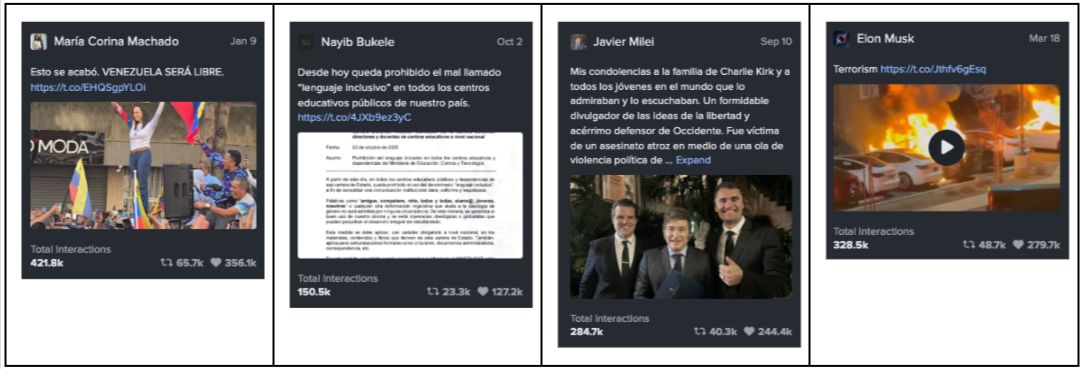
More broadly, political figures helped anchor engagement (especially on X), where posts from María Corina Machado, Elon Musk, Nayib Bukele, and Javier Milei dominated attention.
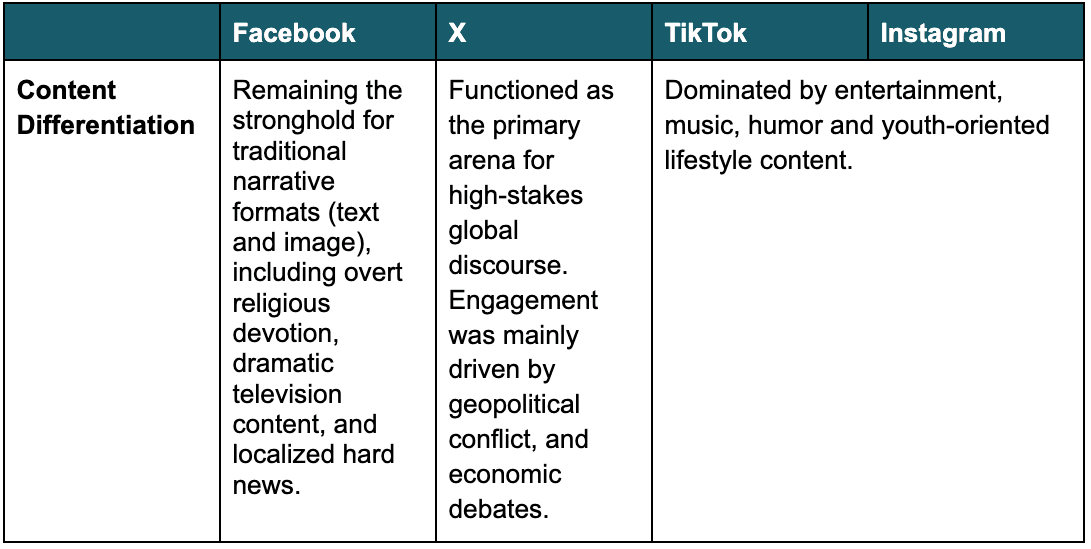
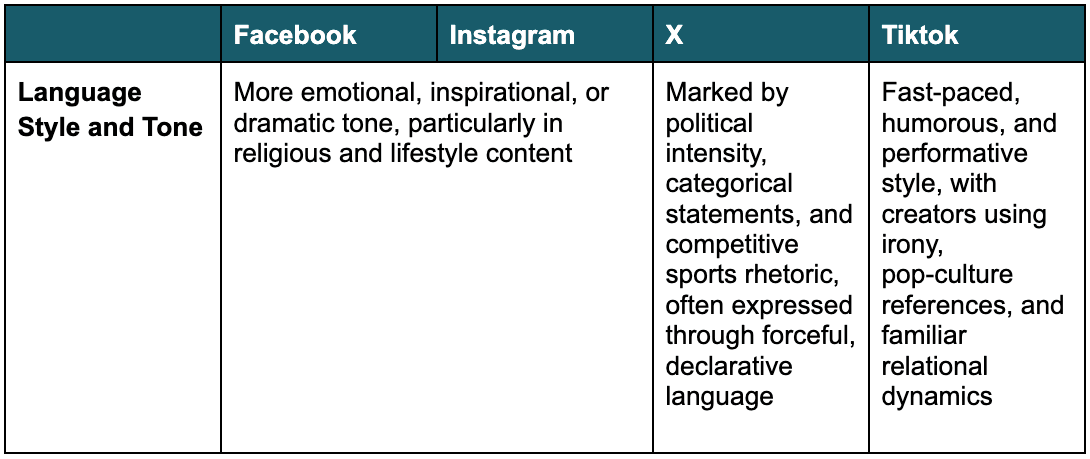
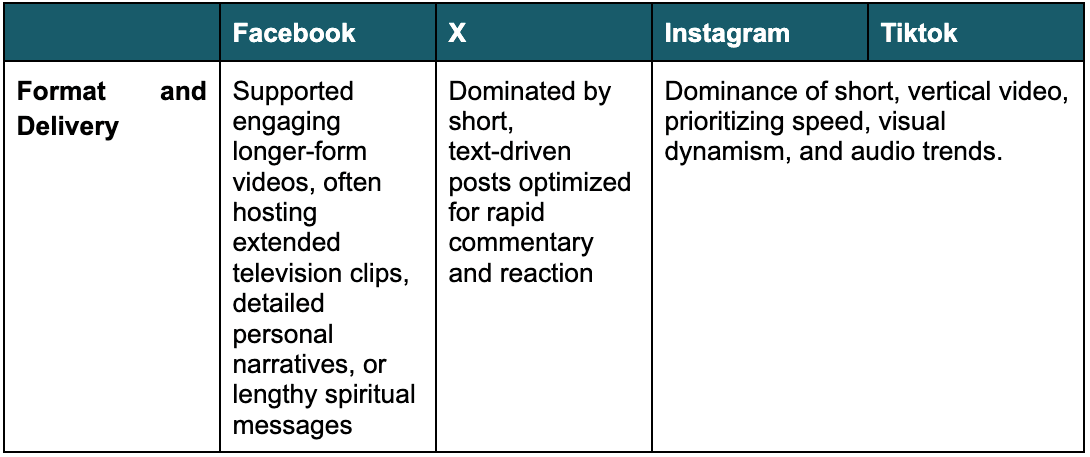
The Different Ways Stories Are Told on X, TikTok, Instagram, and Facebook
High Engagement, High Risk: Disinformation And Hateful Narratives That Thrived in Spanish-Language Social Media
Based exclusively on the NewsWhip dataset, DDIA researchers found several high-engagement content clusters that could fall into the category of misinformation, disinformation, highly polarizing narratives, or plain hateful speech. These posts thrived on sensationalism, emotional framing, and ideological confrontation, often generating substantial interaction. We divided them into two categories:
Sensationalist Crime and Public Safety Hoaxes
Several highly-shared posts focused on sensational crime, violence, or bizarre events, often bordering on or constituting misinformation, designed for maximum shock value and interaction:
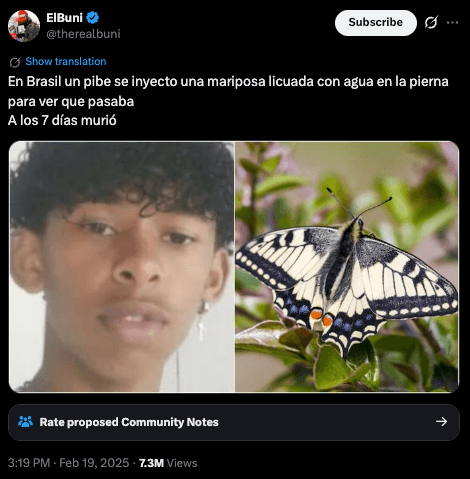
Bizarre/Unverifiable Stories: The X account ElBuni (which has more than 448,000 followers and is administered from Argentina) consistently posted stories of extreme, often unverifiable, nature that garnered hundreds of thousands of interactions. Examples include the claim in Q1 that a man injected a liquefied butterfly in his body to see what would happen (and died), and the unverified story of a bear thanking a driver for letting him cross a road. This type of content often functions as viral clickbait.
Hoaxes and Rumors of Death: The rapid spread of false news about celebrity deaths is evident. In Q3, a post quickly gained traction about the reported death of the Cuban actor Jorge Martínez.
Sensationalizing Crime and Narcoterrorism: Outlets like Latinus captured major engagement through lurid crime stories, such as: "Muere en ataque el hermano de influencer Markitos Toys" and the killing of a celebrity stylist. While often factual, the intense focus on "influencers" and graphic details maximizes emotional impact, potentially obscuring deeper systemic issues.
Health and Wellness Misinformation
Posts offering unverified or misleading health advice circulated heavily, particularly on platforms like Facebook and Instagram:
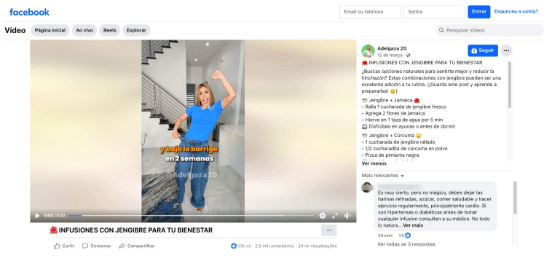
Unproven Health Claims: The Facebook account Adelgaza 20 (which has 20 million followers and is administered from four countries – Colombia, United States, Israel and Poland) routinely posted content promoting unverified "cures" or dietary advice focused on quick results. Examples include claiming that beetroot juice "ELIMINA el abdomen abultado" or that a specific infusion eliminates "inexplicable" abdominal fat related to hormonal imbalance. This content risks misleading users seeking genuine medical or nutritional advice.
The Playbook for High-Impact Content in 2026 (based on 2025)
A detailed analysis of top-performing content in 2025 reveals clear patterns in what captures the attention of Spanish-speaking audiences on social media. These observations match findings from DDIA’s Conversations with Latinos study released in Q3, pointing to four macro trends that worked this year and should guide content strategies in 2026.
Authenticity and Purpose Win: The most successful content – from the spiritual messaging of Dios Es Bueno to the social activism of Carlos Eduardo Espina – was driven by authenticity and a clearly articulated purpose. Audiences seemed to connect deeply with creators who stood for something, whether a spiritual belief, a social cause, or a genuine personal passion.
Emotion Is the Currency of Engagement: Narratives that sparked strong emotional responses – joy, hope, outrage, or empathy – were the most widely shared and discussed. Content that makes audiences feel something proved far more likely to inspire action (online engagement), turning passive consumption into active participation. Invest in emotional storytelling. Go beyond promoting a product, service, or headline. Identify the human story behind your message and build narratives around how you want your audience to feel.
Short-Form Video Is the Default Format: Video content under three minutes solidified its position as the most effective format for generating engagement across platforms. From breaking news and sports highlights to entertainment and tutorials, short-form, mobile-first video emerged as the gold standard for social media engagement. Design content primarily for mobile consumption. Use vertical formats, clear captions for sound-off viewing, strong hooks within the first three seconds, and on-screen headlines to retain attention and maximize reach.
Identify and Serve a Niche: The success of Dios Es Bueno underscores the power of specialization. Rather than trying to reach everyone, focus on specific communities and speak directly to their values, needs, and lived experiences. Loyalty within a niche often drives deeper and more sustained engagement than broad, generic appeals.
Under-represented Narratives That Might Need More Attention
Technological Innovation and Scientific Developments: Discussions surrounding future-forward topics like major technological launches, and the competitive landscape of Artificial Intelligence consistently garnered lower interaction figures among U.S. Latinos. This suggests that the audience generally prioritized immediate, personal, or entertainment-driven content over complex or aspirational scientific and technological narratives.
Sustained Geographic Crises and Long-Term Natural Disasters: While immediate emergency coverage performed well in the dataset reviewed by DDIA, content dedicated to analyzing long-term climate change, environmental sustainability, or the geopolitical fallout of recurring natural disasters received comparatively low traction. The engagement around these topics often peaked only when linked to a sudden, local incident or framed as sensational news.
Why Watching Latinos on WhatsApp Matter
As you know, since 2023, DDIA has been systematically capturing (and sharing) what happens inside public, Latino-led, U.S.-based WhatsApp groups – a space that remains largely invisible to traditional media and researchers. Using anonymized data collected by Palver, DDIA has been able to map conversations at a scale and depth that no other organization currently matches, offering a rare (weekly) window into trends shaping Latino information ecosystems.
The size of the debate happening in this universe underscores why close, continuous monitoring is essential. Between January 1 and December 16, 2025, at least 761,000 unique messages in Spanish circulated across more than 3,300 public WhatsApp groups based in the United States. Together, these groups brought together over 702,000 participants, spanning all 50 states. This nationwide footprint allows DDIA not only to identify viral narratives, but also to track how they emerge, spread, and evolve across regions.
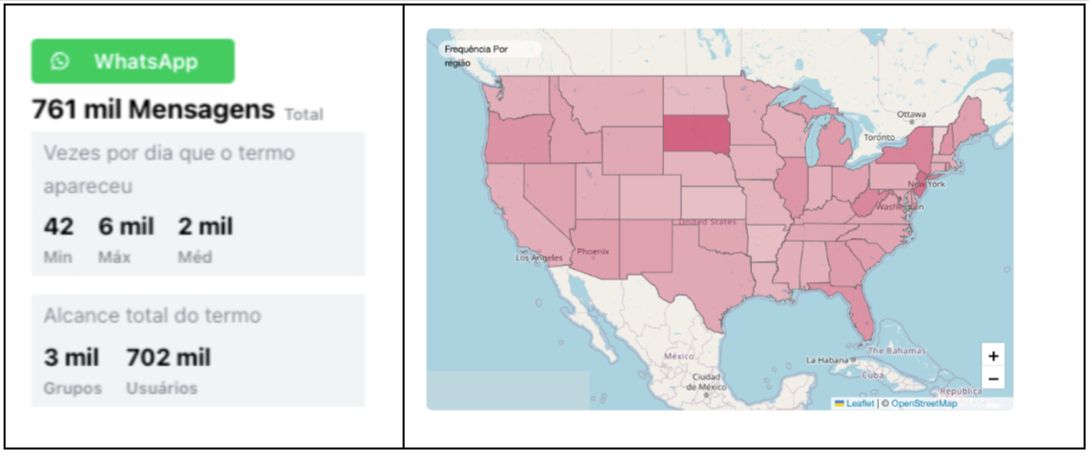
Looking at this data over time reveals a clear pattern: WhatsApp consistently functions as a frontline platform for breaking news. Peaks in message volume (check below) repeatedly coincide with major news events, moments of political tension, and sudden crises, highlighting the app’s role as a rapid-response information channel for Latino communities.

March 3: President Trump announces new tariffs on Mexico, triggering immediate cross-border economic and political debate in Latino WhatsApp groups.
April 18: Two developments dominate the conversation: the Supreme Court hears arguments in Trump’s effort to end birthright citizenship, and the case of Kilmar Abrego Garcia, a U.S. citizen mistakenly deported and imprisoned in El Salvador, breaks into the news cycle.
October 11: A fragile ceasefire in Gaza holds amid prisoner exchanges, prompting intense discussion of U.S. foreign policy and the humanitarian toll of the conflict.
October 16: The U.S. government enters a shutdown, quickly becoming a major source of uncertainty and speculation across public WhatsApp groups.
October 21: Conversation surges after reports that the U.S. struck a suspected drug-smuggling vessel in the Pacific, alongside a federal court decision allowing the deployment of troops to Portland amid ongoing protests.
November 7: The prolonged effects of the government shutdown fuel renewed concern, particularly around air travel disruptions and uncertainty over SNAP benefits.
November 15: Reports of large-scale immigration raids in Charlotte, North Carolina spark widespread alarm and rapid message sharing across Latino-led WhatsApp networks.
WhatsApp is a living ecosystem – one that reacts in real time to the news cycle, amplifies narratives quickly, and deserves sustained scrutiny. We'll keep our eyes there in 2026 too.