This article was also published in REDESCover, DDIA’s weekly newsletter. Click here to subscribe and get the next edition delivered straight to your inbox.
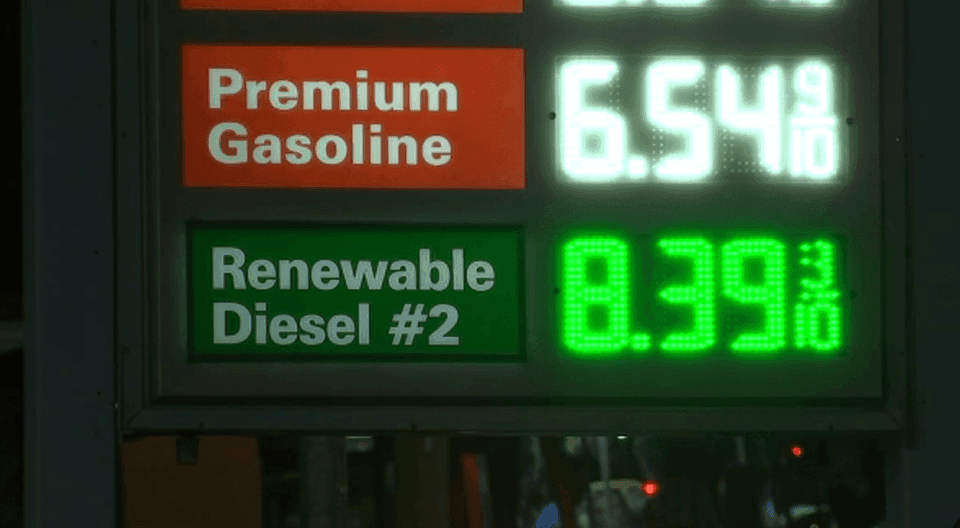
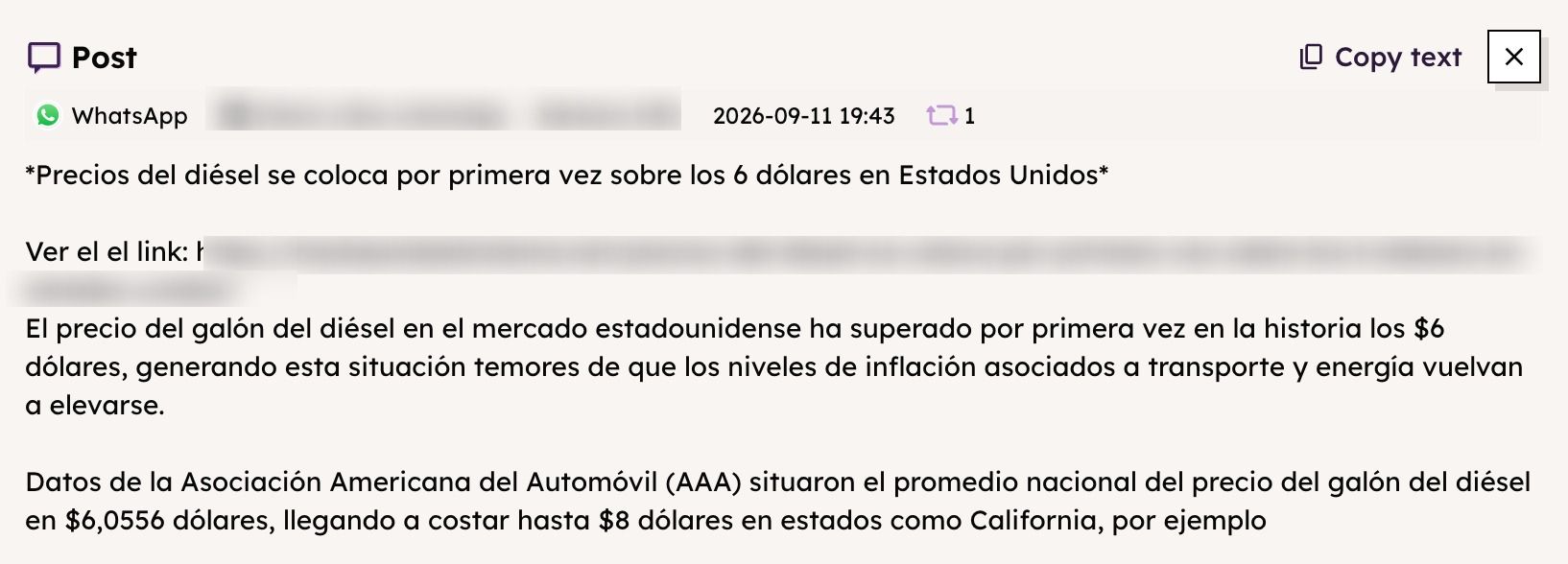
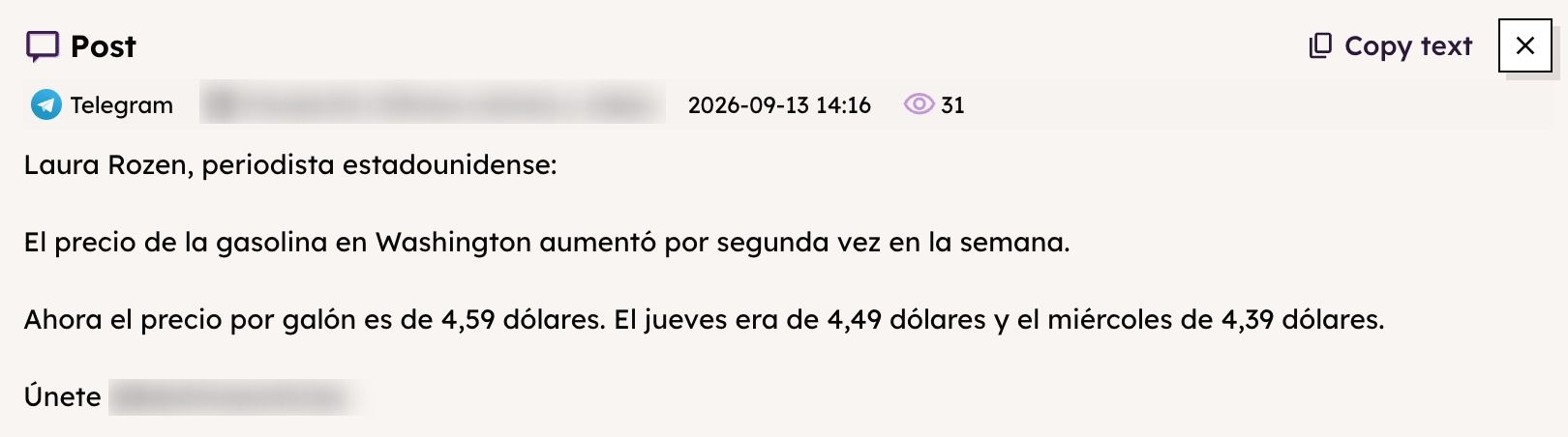
On Tuesday, Sept. 15, diesel prices hit a record $6.26 per gallon nationwide in the United States and climbed above $8.00 in California. Gasoline also continued its relentless rise, reaching $4.32 after 27 consecutive days of increases. One year ago, a gallon of gas cost $3.18.
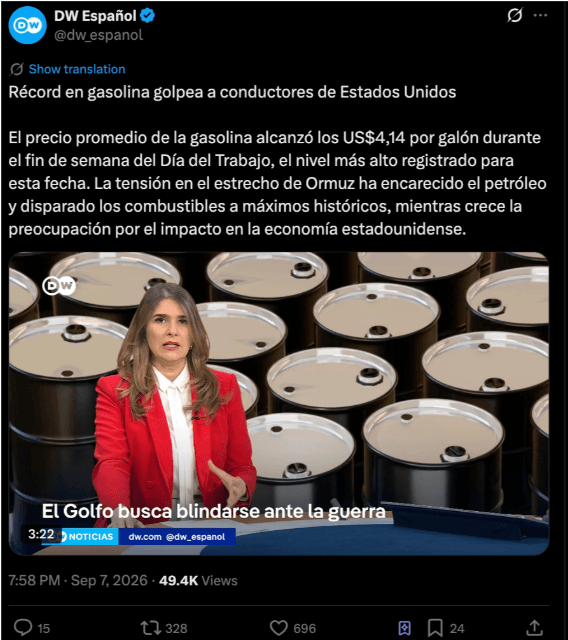
Driven by tighter crude oil supplies amid conflicts in the Middle East and Eastern Europe, the spike is rippling well beyond the pump. Higher fuel costs are raising transportation and agricultural expenses, putting additional pressure on food prices and household budgets.
An analysis of public Spanish-language WhatsApp and Telegram groups between September 7 and September 15 (a part of DDIA's weekly narrative analysis work) shows that many U.S. Latinos are discussing these increases as an immediate threat to their cost of living, with concerns ranging from more expensive groceries and delivery fees to broader economic hardship. Across the conversations reviewed by DDIA, financial anxiety and frustration dominate, alongside skepticism that the economic pressure will ease anytime soon.
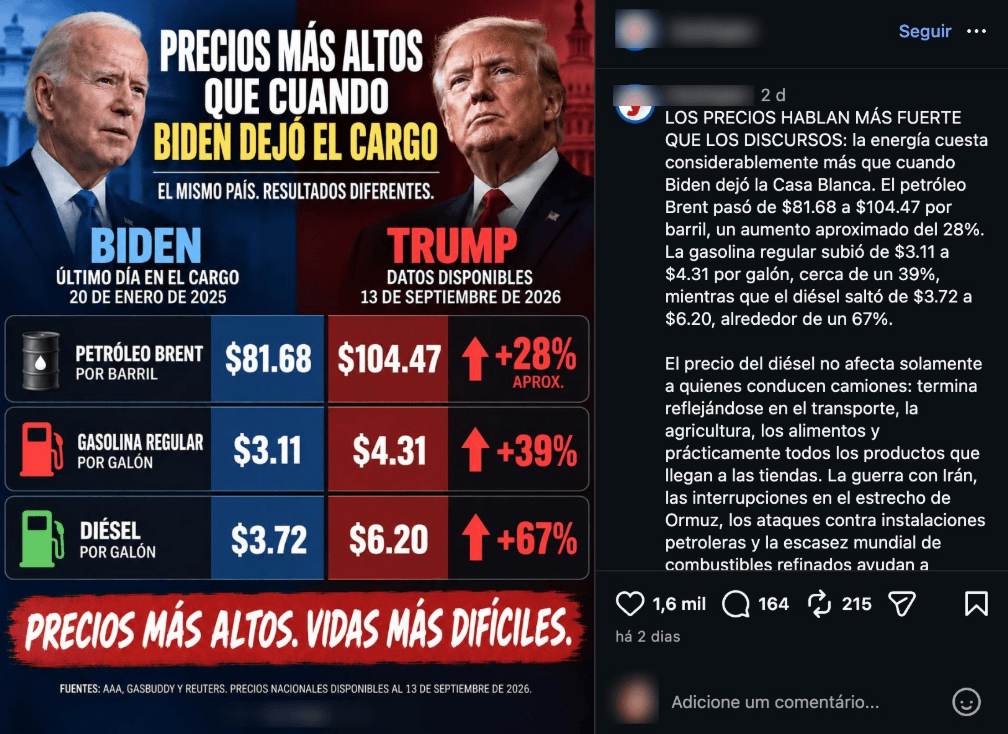
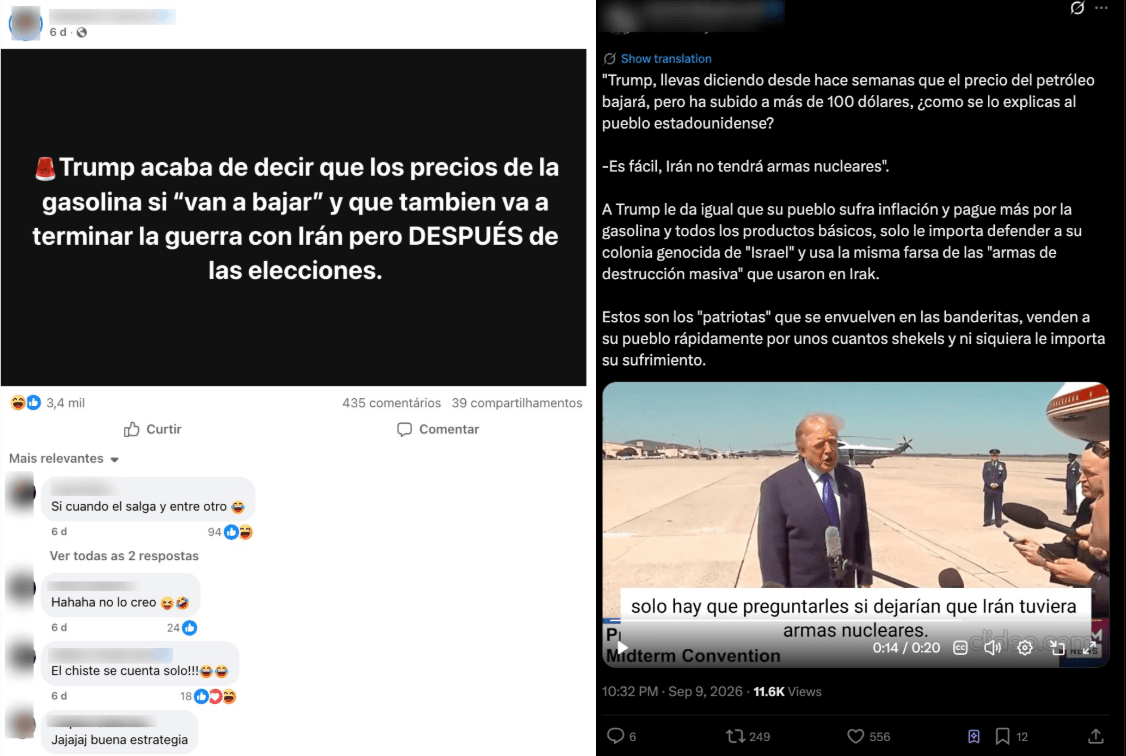
High-engagement videos shared on open social media and on messaging apps also blame U.S. foreign policy for involving the country in costly overseas conflicts that consumers are now paying for at the pump.
President Donald Trump’s promise that fuel prices will fall below $2 per gallon after the 2026 midterm elections has further politicized the issue, turning gas prices into an emerging electoral flashpoint in some corners of the Latino online universe.
Critics and independent Latino creators have portrayed Trump's pledge as an admission that relief is being postponed, while some have accused the administration of using economic pain to influence voters.

Several grassroots influencers like Heidytorr, on the other hand, are now tying fuel-price frustration directly to political participation, urging followers to check their voter registration and framing the cost of gas as a reason to show up in November.
Methodology: DDIA collected and analyzed social media and messaging apps raw data using NewsWhip and Open Measures. The data collection used to back this newsletter took place between Sep 7-15, 2026. All searches were conducted in Spanish and English.