This article was also published in REDESCover, DDIA’s weekly newsletter. Click here to subscribe and get the next edition delivered straight to your inbox.
Spanish-language social media engagement this week revealed that Latino audiences are closely following the money flowing into U.S. midterm election campaigns and have strong opinions about who is donating, who is benefiting and what those financial relationships mean for American politics. From Elon Musk's multimillion-dollar contributions to Republican campaigns to grassroots fundraising for Democrats and controversies surrounding questionable donations, campaign financing has become a prominent topic of political debate, particularly in key states monitored by DDIA (Texas, Michigan, California, Florida, Arizona, and Nevada).
An analysis of data collected from social media platforms and messaging apps through NewsWhip, Open Measures and Sprout Social revealed not only significant interest in campaign financing among Spanish-speaking audiences but also three dominant reactions:
Skepticism about the political influence of wealthy donors, particularly billionaires (like Musk, the Bush family and other businessmen) contributing massive sums to congressional races.
Enthusiasm for grassroots fundraising, with Latino influencers encouraging their followers to financially support preferred candidates.
Outrage over potentially unethical campaign financing, including questionable donations (like receiving money from indicted funders) and controversial campaign practices (like giving out cash to buy gas).
Posts and comments also seem to show that many social media users are using financial developments to assess candidates' credibility, question donors' motivations and mobilize support for their preferred political causes.
But this analysis also uncovered a striking contradiction. Democratic-leaning voices criticized Musk's financial support for Republicans while celebrating fundraising efforts by Barack Obama and Alexandria Ocasio-Cortez. Conservative commentators, meanwhile, defended Musk's contributions but portrayed Democratic fundraising as an attempt to advance a radical political agenda.
In other words, political polarization is also shaping how Latino audiences discuss campaign money. Similar financial activities can be celebrated as democratic participation or condemned as an attempt to buy political power, depending on who is writing the check.
Here is how these dynamics played out this week.
Musk's $276 Million Fuels Accusations of Buying Political Influence
Elon Musk's massive contributions to Republican campaigns became a political liability among Democratic-leaning Latino audiences, who portray the billionaire's spending as an attempt to buy influence in Congress. Conservative voices, meanwhile, defend his financial involvement as essential to Republican victories.
Musk has reportedly contributed more than $276 million to Republican political committees since July, bringing his total contributions during the 2026 election cycle to approximately $366 million. His donations have supported organizations working to elect Republicans to Congress, including America PAC, the Senate Leadership Fund and the Congressional Leadership Fund.
In Texas, a key state for Latinos, Musk's financial support has become a campaign issue in the Senate race between Republican Ken Paxton and Democrat James Talarico. Talarico accused Musk of trying to buy political influence, arguing that the billionaire wants to have his own senator. The accusation reached Spanish-speaking audiences through prominent Latino digital voices and generated thousands of interactions.
Left-leaning influencer Carlos Eduardo Espina, for example, brought Musk's contributions to the attention of his millions of followers, highlighting that the amount is as one of the largest political contributions in U.S. history.
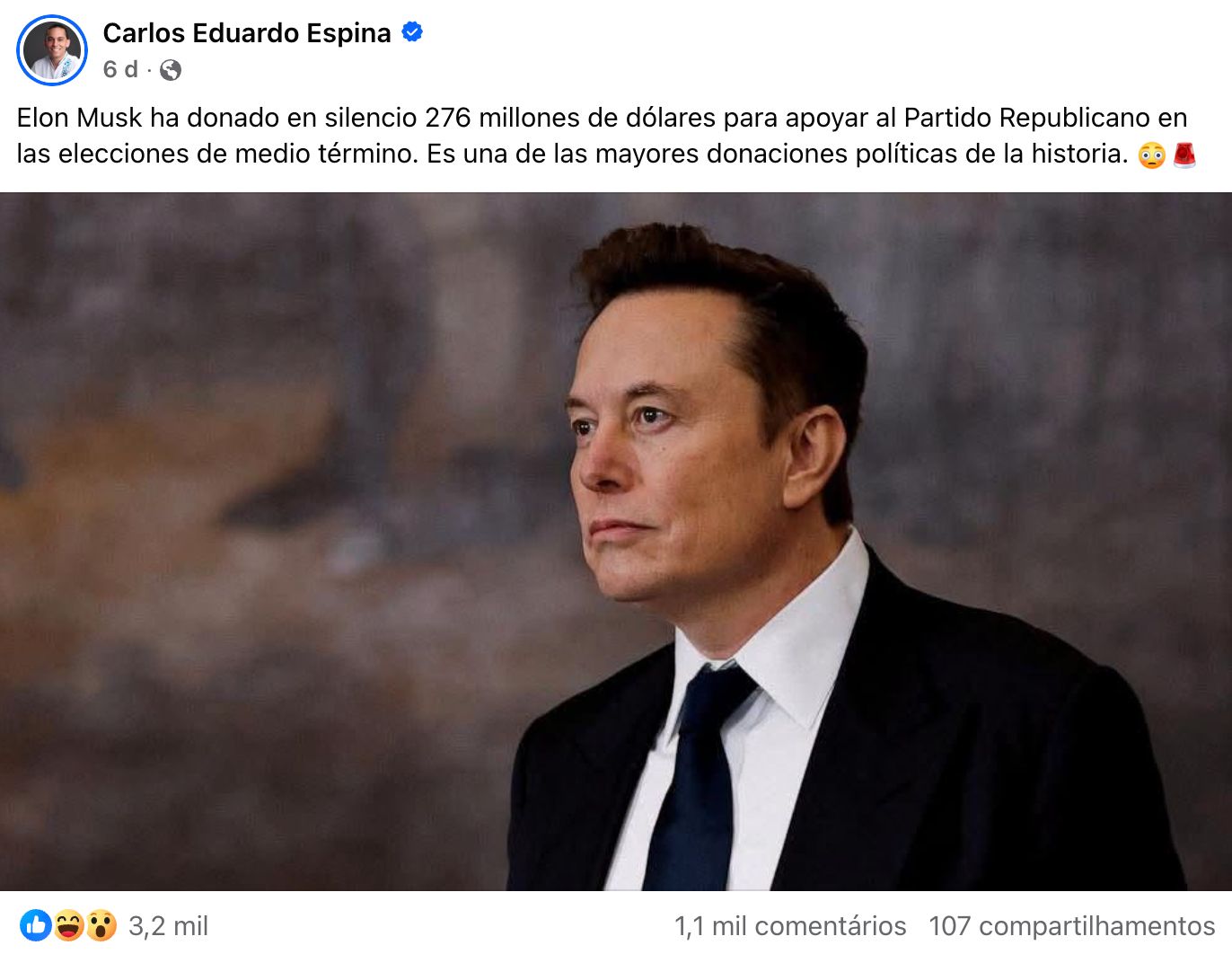
The reactions on Espina's posts reflected a partisan divide. Democratic-leaning social media users questioned Musk's ability to shape elections through massive financial contributions, while conservative commentators portrayed his spending as a necessary investment in maintaining Republican control of Congress.
Democratic Fundraising Energizes Supporters and Fuels Conservative Attacks
Democratic fundraising also generated enthusiasm among progressive Latino audiences, but conservative Spanish-language news outlets turned Alexandria Ocasio-Cortez's $1 million contribution into an ideological warning. The contrasting reactions show how the identity of a political donor can matter more than the amount contributed.
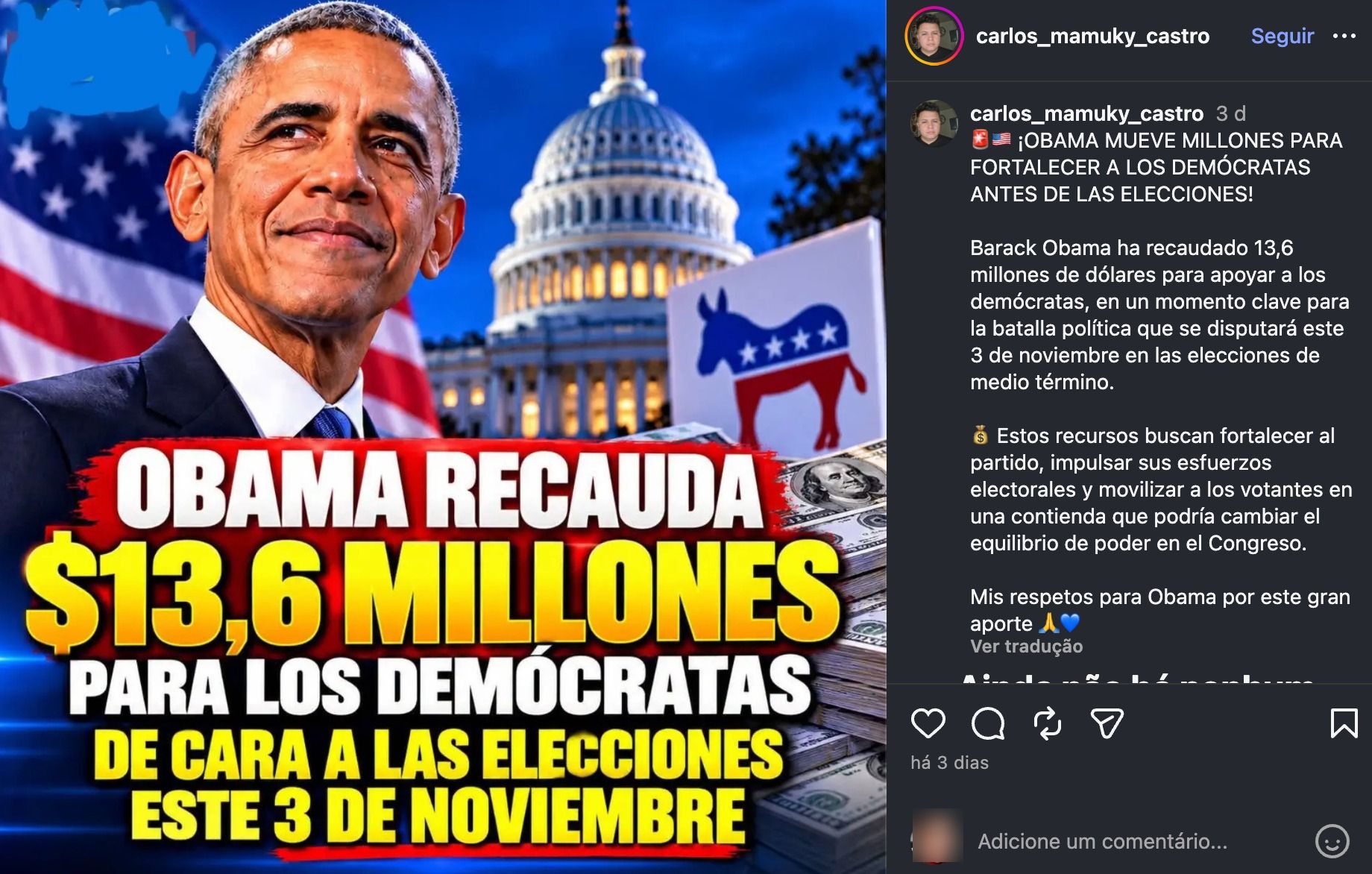
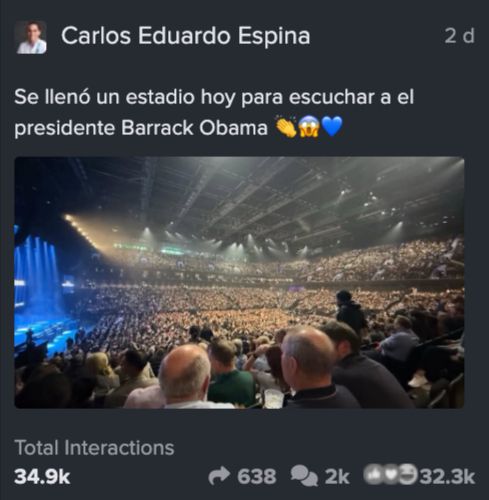
Former President Barack Obama helped raise $13.6 million for Democratic candidates nationwide this week, attracting attention from progressive Spanish-language accounts that presented his involvement as a sign of Democratic momentum ahead of November 3.
Former President Bill Clinton and former Secretary of State Hillary Clinton have also returned to campaign fundraising, offering to travel across the country to support Democratic candidates and engage with Latinos.
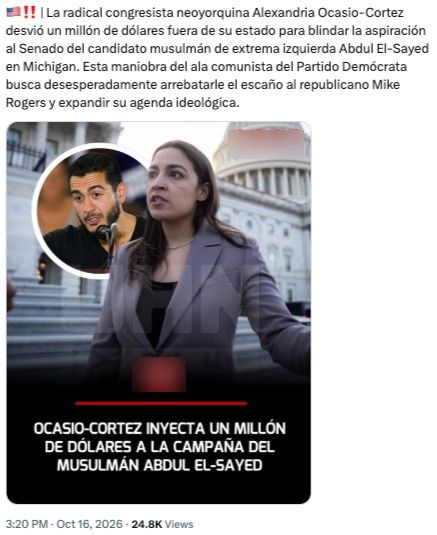
Meanwhile, Ocasio-Cortez transferred $1 million from her campaign funds to a joint fundraising committee supporting Abdul El-Sayed's Senate campaign in Michigan, triggering a sharply different conversation in conservative Spanish-language media.
One publication on X reached 24,000 people describing Ocasio-Cortez as a "radical" congresswoman who had diverted money outside New York to support a "far-left Muslim candidate" in Michigan. Rather than focusing on the financial transfer itself, the coverage emphasized El-Sayed's religion and political ideology, portraying the contribution as part of a broader effort by progressive Democrats to expand their influence in Congress.
The contrast with conservative coverage of Musk was striking. His multimillion-dollar contributions were defended as legitimate political support, while Ocasio-Cortez's much smaller transfer was portrayed as a threat.
In both cases, partisan commentators used campaign financing to reinforce existing political narratives: Republican donations were framed as a defense against Democrats, while progressive contributions became evidence of an ideological agenda.
Barbara Bush's $2,500 Donation Highlights Republican Divisions
A relatively small donation from Barbara Bush attracted political attention because it symbolized support for a Democrat from a member of one of America's most prominent Republican families.
Bush, daughter of former Republican President George W. Bush, contributed $2,500 to Lone Star Rising PAC, a committee supporting Democrat James Talarico in his Texas Senate race against Ken Paxton.
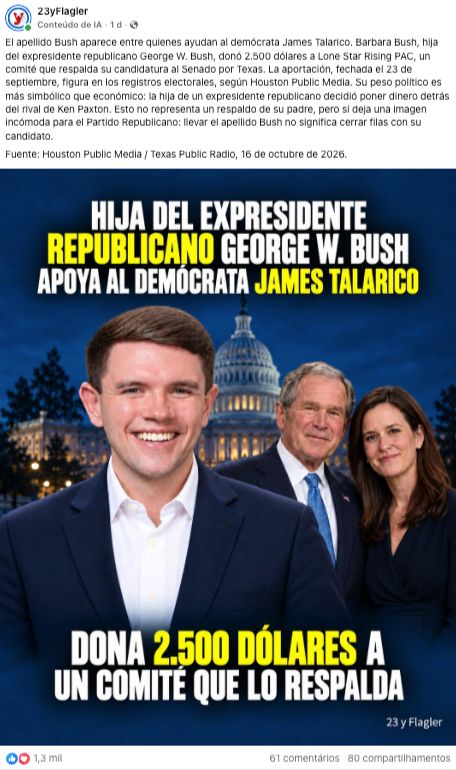
Although the amount was insignificant compared with Musk's contributions, Spanish-language political coverage highlighted its symbolic value as evidence of divisions between the Bush political dynasty and the Republican movement aligned with President Donald Trump.
For Talarico, the contribution carried a political message beyond its monetary value: His campaign was attracting support from outside traditional Democratic circles.
The contrast between Musk and Bush illustrates two different ways donors can influence political campaigns. Musk's contributions provide substantial resources for Republican electoral operations. Bush's donation, by comparison, offers Talarico a recognizable political endorsement from a family historically associated with the opposing party.
In both cases, the donor's identity became as newsworthy as the contribution itself.
Questionable Donations and Campaign Giveaways Fuel Distrust
Allegations of improper financial relationships and controversial campaign practices generated some of the most negative reactions in Spanish-language political conversations. Unlike fundraising announcements, these stories focused on whether candidates and their supporters were using money ethically.
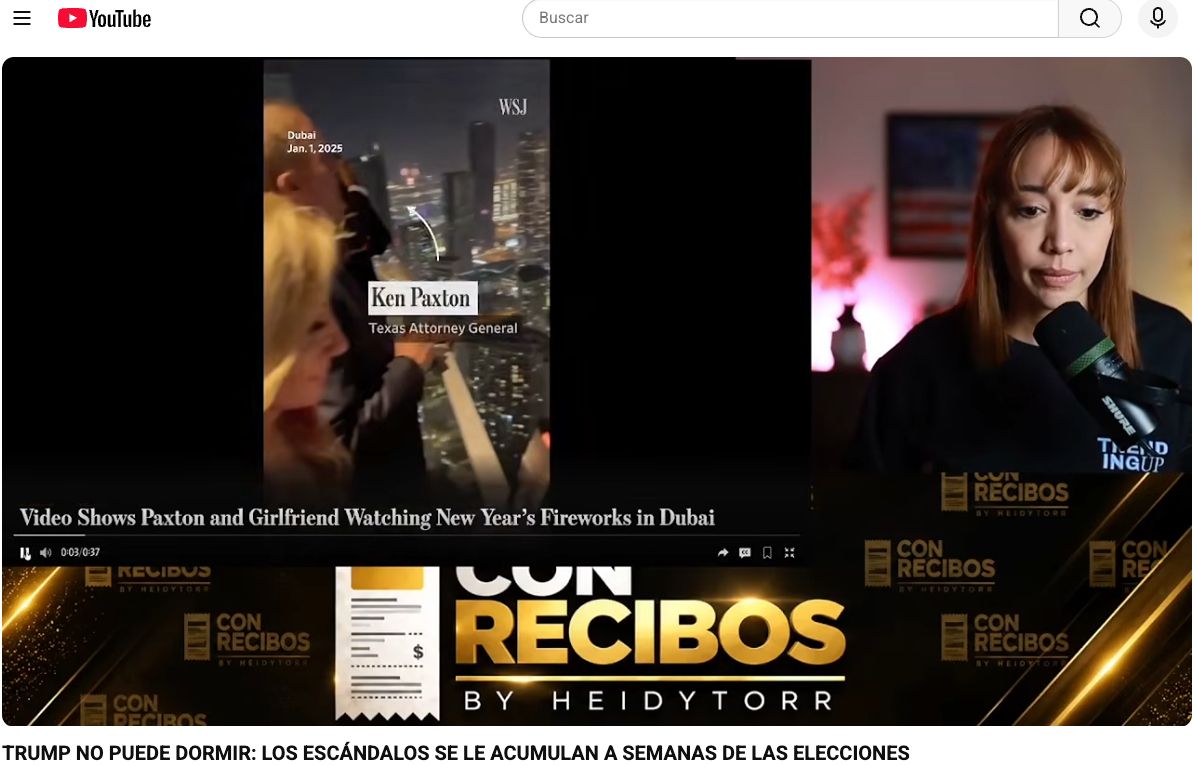
In Texas, investigative reporting raised questions about Republican Senate candidate Ken Paxton's financial relationship with healthcare businessman Anosh Ahmed. According to the Wall Street Journal, Paxton received approximately $190,000 in campaign contributions from Ahmed, including a $25,000 check written shortly after Ahmed was indicted in connection with an alleged $15 million federal healthcare fraud scheme.
Video footage also reportedly showed Paxton celebrating New Year's Eve 2024 with Ahmed in Dubai. The revelations prompted scrutiny of their relationship, although receiving a campaign contribution does not, by itself, establish wrongdoing.
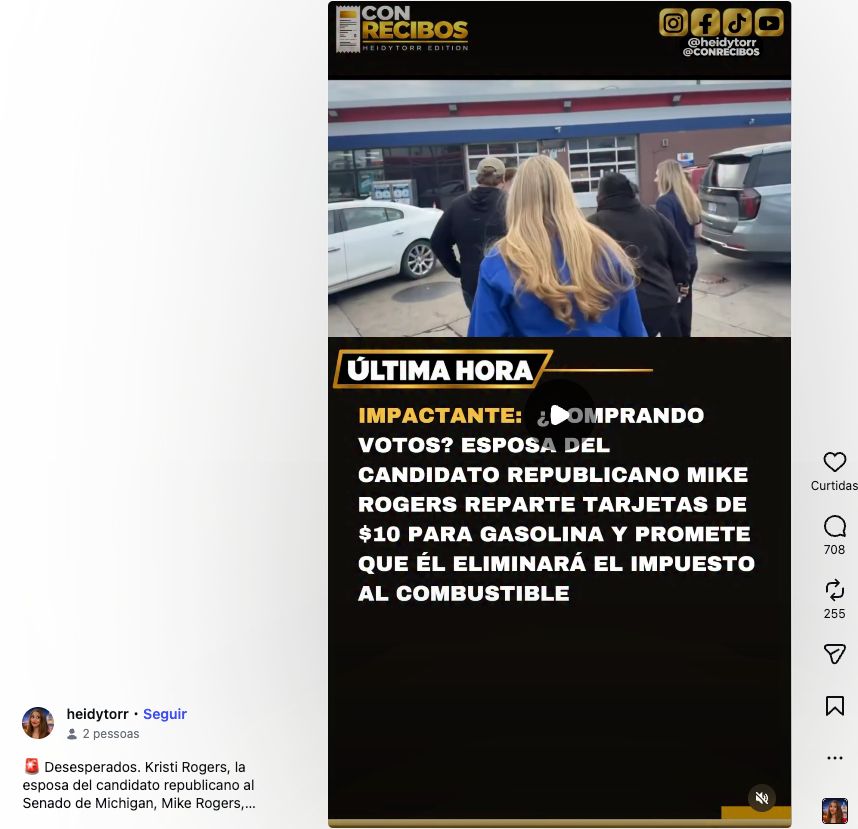
In Michigan, Kristi Rogers, wife of Republican Senate candidate Mike Rogers, faced criticism after reportedly distributing $10 gas cards during campaign events to highlight rising fuel prices. The giveaways raised questions about compliance with campaign laws and became another example of how campaign-related financial activities can generate controversy.
Spanish-language discussions about these incidents featured criticism, sarcasm and accusations of political opportunism. Latinos online seem to know that money can help candidates win elections, but it can also undermine their credibility when its origins or uses come under scrutiny.