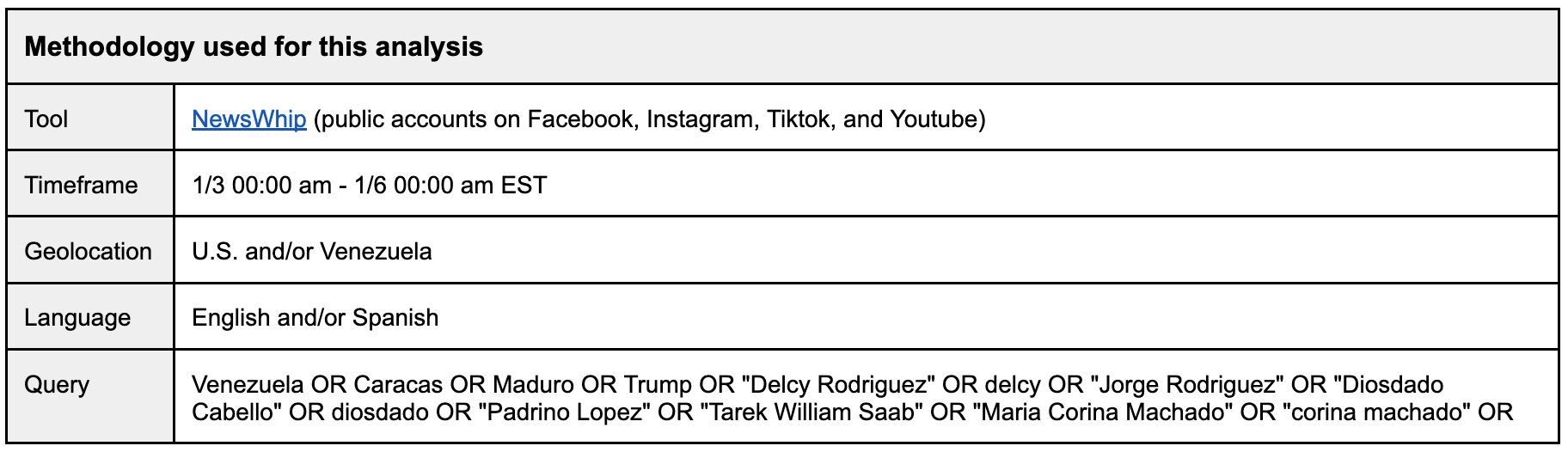
The U.S. intervention in Caracas and the subsequent capture of Nicolás Maduro triggered a digital firestorm of at least 80,000 posts with 806 million interactions (per NewsWhip data) on open social media platforms in the United States and Venezuela between January 3 and January 6, 2026. As is usually the case, certain accounts/profiles/handles/channels commanded the highest levels of engagement, potentially serving as “narrative-setters” for the online conversations happening on Facebook, Instagram, TikTok and YouTube.
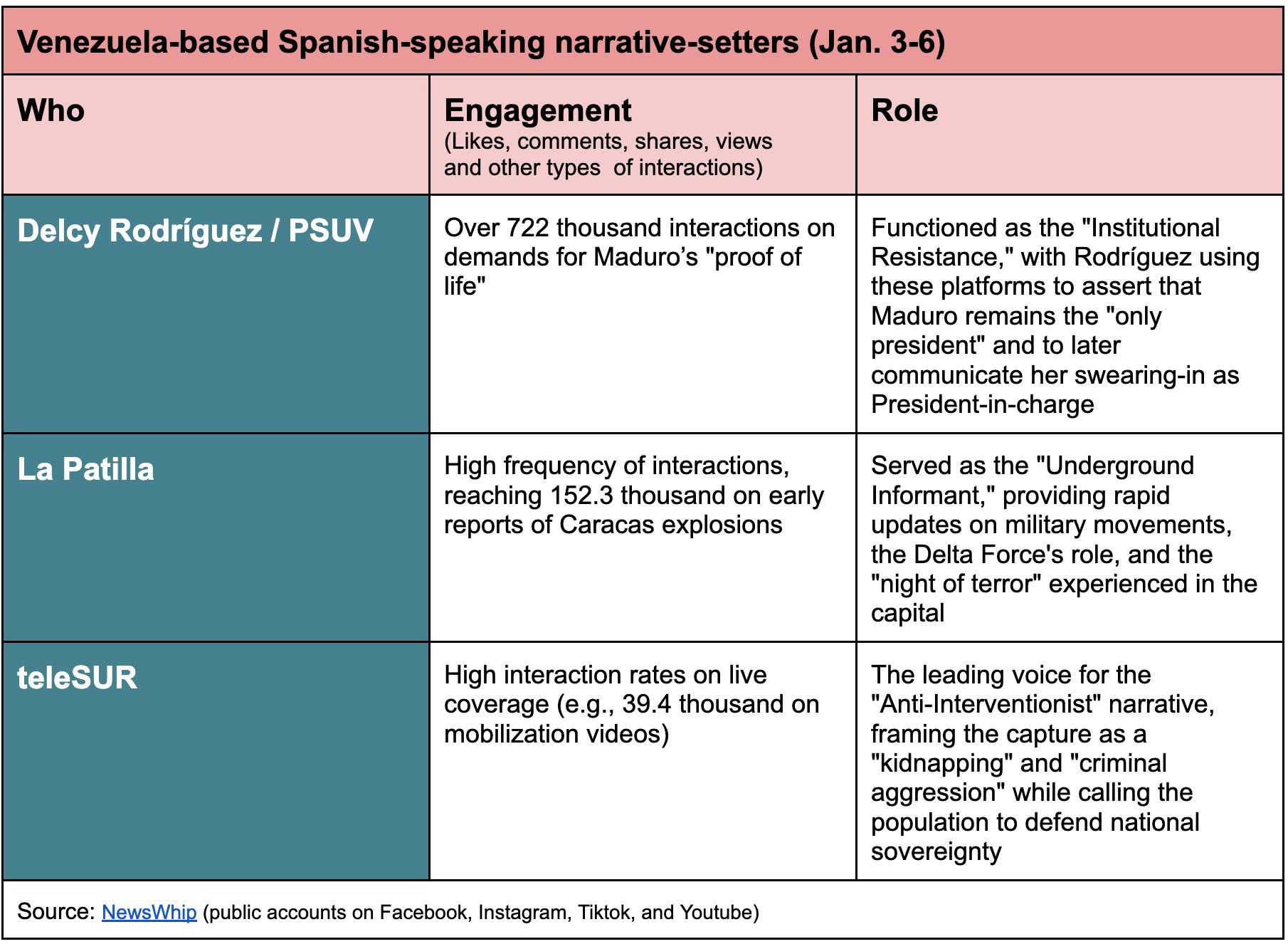
The following analysis, harnessing numbers from NewsWhip, shows that the story being told was split into three distinct, geographically-coded realities (something we have already explored for WhatsApp and Telegram here and here), and were led by at least three accounts each.
The Diaspora Narrative: "Justice and The End of Exile"
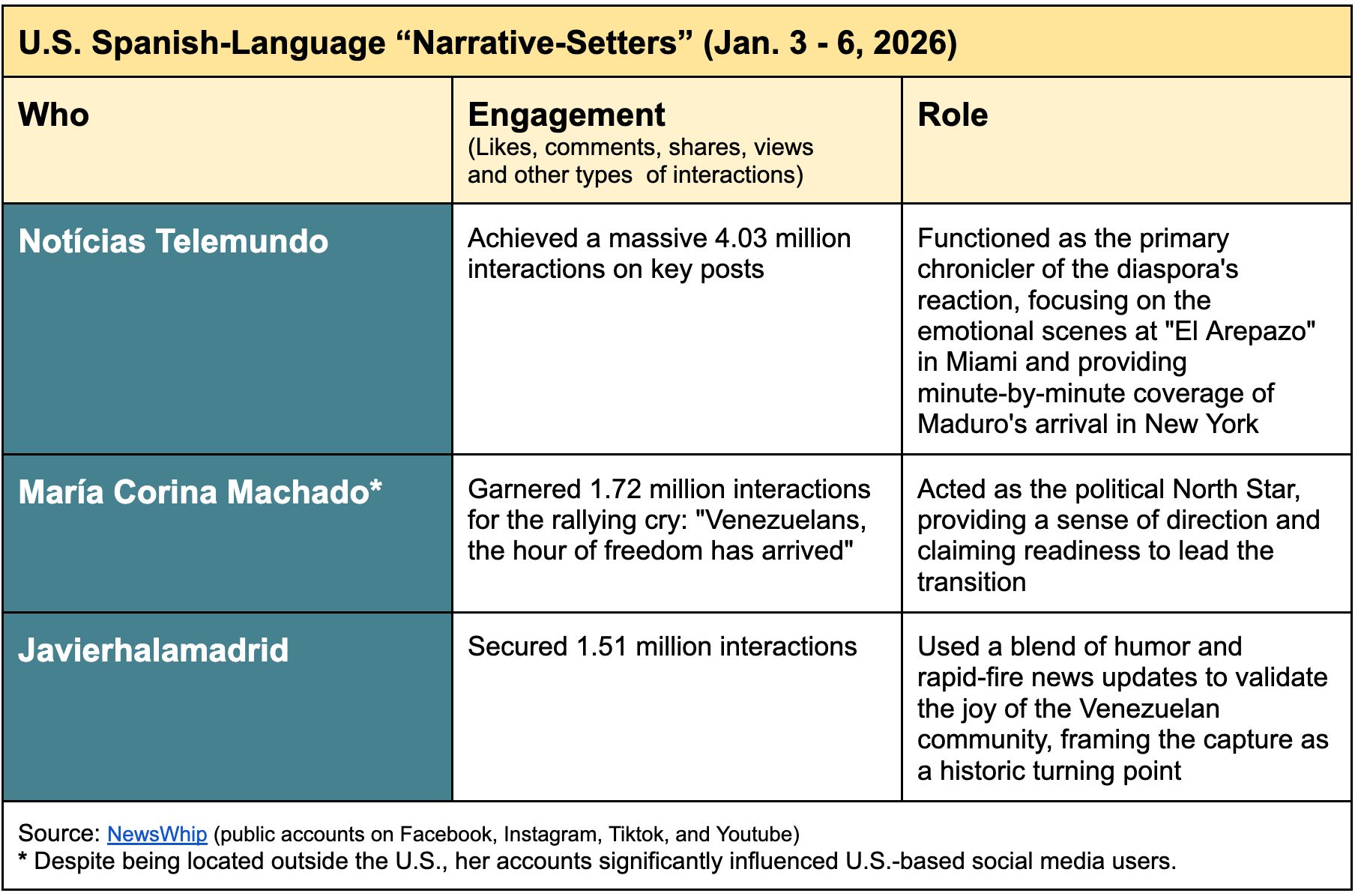
Major U.S. Spanish-Language Narrative-Setters: Telemundo, Maria Corina Machado, Javierhalamadrid
For Spanish-speakers in the United States, a group mostly composed of Latin Americans, including the Venezuelan diaspora and groups from other Spanish-speaking countries in the region, the digital space acted as a virtual plaza for celebration. The most prominent narrative in this universe was personal and visceral, focusing on the human cost of the Maduro era and the hope of return. Social media posts talking about the "end of the nightmare" were among the most viral, together with publications focused on the "justice" of the capture and the emotional release of the exile community.
The U.S. English-Language Domestic Narrative: "Policy, Law and Polarization"
Major U.S. English-Language Narrative-Setters: The Daily Show, Fox News, The White House
For many English-speakers in the United States, the most viral social media conversations about Venezuela were less about human rights and more about U.S. political identity. At the highest engagement levels, the events were viewed often through the lens of constitutional authority and the "America First" doctrine. The primary narrative was a "battle of policy," with the focus on the legality of the U.S. strike in Caracas and the strategic implications for Venezuelan oil.

The Venezuelan Narrative in Country: "Sovereignty and Crisis"
Despite lower data availability from within Venezuela for Facebook, Instagram, TikTok and Youtube in NewsWhip, from what we did have, the narrative among Spanish speakers inside the country describe a "night of terror" and several calls for institutional resistance – mostly led by pro-Maduro voices. (Since the Delcy Rodriguez interim government declared a “state of external commotion,” we have seen less viral content from opposition voices on social media and public WhatsApp and Telegram groups).
The Evolution of the Story: A 72-Hour Timeline
While different demographics relied on their own distinct narrative-setters, the broader conversation across both languages and countries followed a certain trajectory. Between January 3 and 6, DDIA identified three pivotal phases that defined the narrative for all groups.
Jan 3-4 - The Shock: In this stage, social media posts offered "sensory data." Engagement was driven, for example, by videos of explosions in Caracas, and flight radar screenshots showing empty Venezuelan airspace.
Jan 4-5 - The Visual confirmation: The release of the "perp walk" and USS Iwo Jima photos of Nicolás Maduro served as the primary drivers in this phase of the online conversation, anchoring the reality of the capture for all demographics.
Jan 5-6 - Speculation and institutional shifts: In the last 24 hours reviewed by researchers, the highest engagement in both languages and countries followed Delcy Rodríguez’s swearing-in and Maduro’s "not guilty" plea in New York. Users also began to grapple with the long-term political fallout.
Platform Power: It's all about Short-Videos
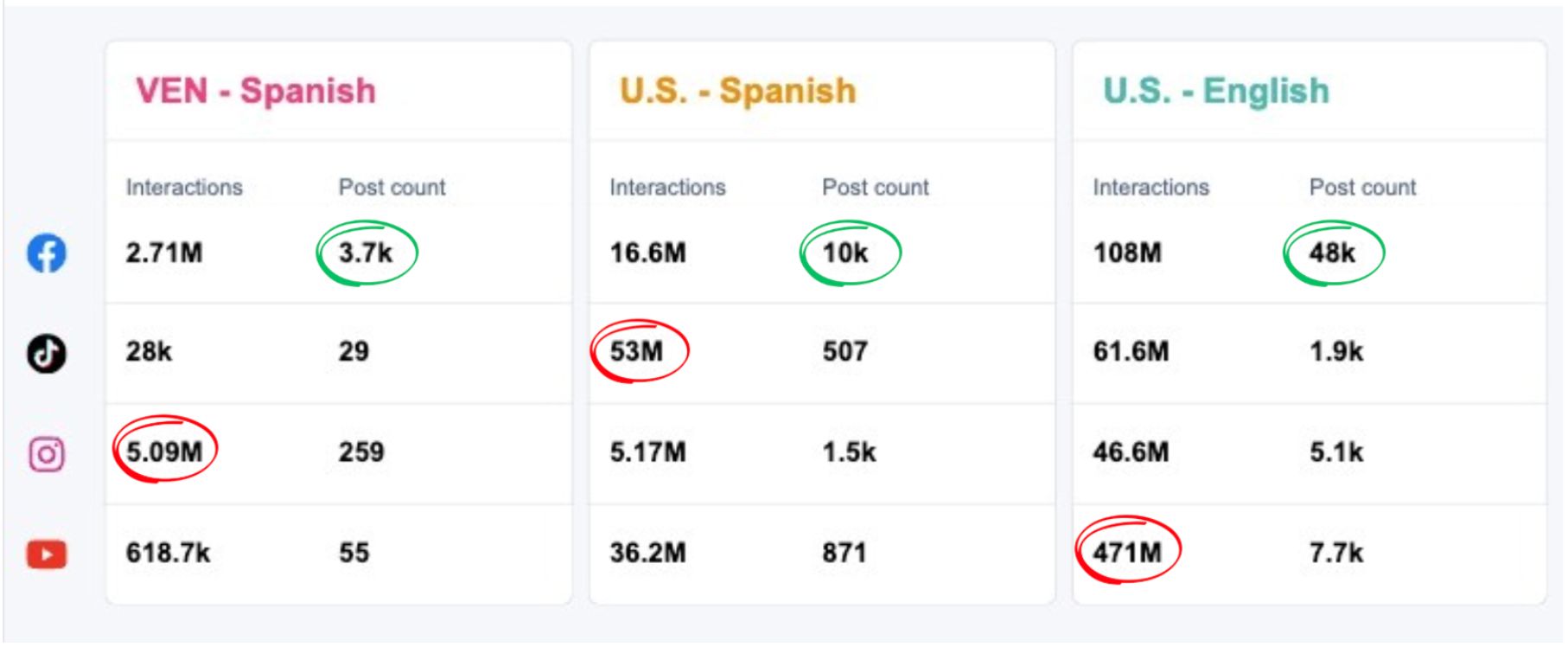
The data extracted from NewsWhip offers unique insight on how news regarding the events in Venezuela traveled during the first 72 hours. While Facebook remained the leader in the volume of posts in all demographics (see the green circles in the image below), Instagram became the leader in engagement density for Spanish speakers in Venezuela (red circle in the first column), Tiktok was the leader among Spanish-speakers in the United States (red circle in the third column), and YouTube ranked first within U.S.-based English-speakers (red circle in the fifth column below). Make sure to review the table below (generated by the social listening tool) and reflect on the power of short-videos during this period.